






- 301 Views
- 7 Min Read
- (116) Comments
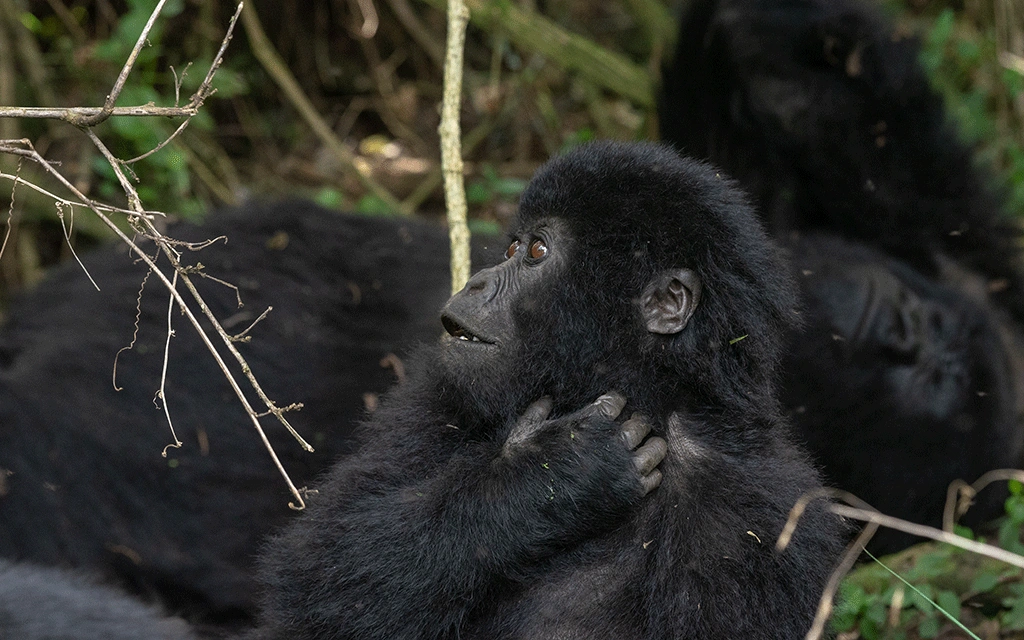
Gorilla Trekking Experiences in Uganda Uganda is one of the world’s last strongholds for the mountain gorilla, and trekking to see these gentle giants is the country’s signature wildlife experience. With over half of the global population living in Uganda’s southwestern forests, gorilla trekking here combines breathtaking scenery, well-run conservation rules, and an intimate hour in the presence of a family of wild gorillas you’ll never forget.
Where You Can Trek: Bwindi & Mgahinga
Uganda has two protected areas for mountain gorilla tourism:
Bwindi Impenetrable National Park – A UNESCO World Heritage Site of steep hills, tangled jungle, and misty valleys. Bwindi is divided into four tracking sectors (Buhoma, Ruhija, Rushaga, and Nkuringo), each with its own Visitor Information Centre. You’ll be assigned to a family based on your sector and fitness level on the morning of your trek.
Mgahinga Gorilla National Park – A compact, dramatically beautiful park set on the volcanic Virunga massif. Treks here usually start from the Ntebeko/Muhavura Visitor Centre, and trails climb through bamboo to montane forest with sweeping views into Rwanda and the Democratic Republic of Congo.
Both parks are managed by the Uganda Wildlife Authority (UWA) and follow the same standards for safety and conservation.
What a Trek Day Feels Like
Your day begins early at the sector’s visitor centre with registration and a detailed briefing from UWA rangers. You’ll be grouped according to the gorilla family you’re going to track and, where possible, your fitness level. Trackers go ahead at first light to locate the family you’ve been allocated. Walking times vary widely—some families are close, taking 1–2 hours; others may require 3–6 hours of hiking with stops. Trails can be steep, muddy, and overgrown, but local porters and your guides set a gentle, steady rhythm.
Once you reach the family, the clock starts: you’ll have up to one hour with the gorillas, quietly observing their feeding, grooming, play, and the silverback’s watchful presence. Then you hike back to the start point for a debrief and certificate. Uganda’s official guidelines set one hour of viewing for standard treks and up to four hours for the special Habituation Experience.
Gorilla Habituation Experience (GHEX)
Unique to Uganda, the Gorilla Habituation Experience lets a tiny group accompany researchers and rangers to spend up to four hours with a semi-habituated family. It’s more immersive, often more challenging, and limited to just four people per day. It costs more than a standard permit, reflecting the research focus and small group size.
Permits, Prices & Who Can Trek
Gorilla trekking requires a UWA permit purchased in advance. Current tariffs are:
- Foreign Non-Resident (FNR): USD 800
- Foreign Resident in East Africa (FR): USD 700
- East African Community citizens (EAC): UGX 300,000
Prices are per person, per trek, and apply in both Bwindi and Mgahinga. The Gorilla Habituation permit costs USD 1,500.
The minimum age is 15 years for gorilla tracking (12 for chimpanzee tracking), set to protect both visitors and primates. Rangers may ask for proof of age at check-in.
Booking, Availability & Rescheduling
Uganda issues a limited number of permits per gorilla family per day, and popular months sell out early. Permits can be purchased via licensed tour operators or at designated UWA offices.
UWA allows up to two reschedules: the first at no cost and the second with a 25% surcharge, depending on timing and availability. Payment is made in full to confirm your place.
Group Size & Time Limits
To minimize disturbance and disease risk, standard treks visit in groups of up to eight people for one hour of viewing. The Habituation Experience is restricted to four people for up to four hours. These caps keep encounters calm and sustainable and are the reason permits can be scarce in peak months.
How Hard Is It?
Expect uneven ground, roots, slippery sections, stinging nettles, and steep hills. Treks range from easy to strenuous depending on where the gorillas are that day. If mobility is a concern, request an “easier” group during the morning briefing. Porters are available and highly recommended; they provide support on steep sections and carry your daypack—while your fee directly supports local livelihoods.
What to Pack
- Lightweight, waterproof hiking boots with good grip
- Long trousers and a long-sleeved top (for nettles and insects)
- Gaiters or high socks
- Rain jacket/poncho
- Gardening gloves (for pushing vegetation aside)
- 2 liters of water and energy snacks
- Small first-aid kit
- Camera (no flash allowed)
- Face mask if advised
Rules That Protect Gorillas (and You)
Rangers will reinforce the dos and don’ts, which boil down to: keep voices low, maintain a safe distance (typically 7–10 meters), no eating near gorillas, no flash photography, and follow the guide’s instructions at all times. If you feel unwell, do not trek—gorillas are highly susceptible to human respiratory illness.
When to Go
You can trek year-round. The **drier seasons—June to September and December to February—**tend to have firmer trails and clearer views, though rain is possible any day in the rainforest. The wetter months (March–May, October–November) bring lusher forest and fewer visitors; trails are muddier, but sightings remain excellent.
How Long You Need
A 3-day fly-in or drive-in itinerary is the classic minimum: Entebbe or Kampala to Bwindi/Mgahinga, a full trekking day, then return. Many travelers add an extra night to do a second trek in a different sector for variety. If you’re also visiting Queen Elizabeth National Park, Lake Bunyonyi, or Kibale for chimpanzees, plan for 6–9 days.
Getting There & Between Sectors
- By road: From Entebbe or Kampala it’s typically 8–10 hours to Bwindi or Mgahinga. From Kigali (Rwanda) it’s often 4–6 hours to southern Bwindi sectors (Rushaga/Nkuringo).
- By air: Daily domestic flights (to Kihihi for Buhoma/Ruhija or Kisoro for Rushaga/Nkuringo/Mgahinga) shorten travel time dramatically.
Because Bwindi is large and sectors are far apart, book accommodation in the same sector as your permit to avoid long pre-dawn drives.
Choosing a Sector: Quick Guide
- Buhoma (North Bwindi): Classic trailheads, gentler gradients, good lodge variety, and easy add-ons to Queen Elizabeth NP.
- Ruhija (East): High-altitude forest, excellent birding, fewer lodges.
- Rushaga (South): Many habituated families and access to Gorilla Habituation.
- Nkuringo (Southwest): Steep, scenic ridges with spectacular views across the Virunga volcanoes.
- Mgahinga (Nyakagezi): Volcanic slopes and stunning landscapes, plus golden monkey tracking.
Sample 4-Day Gorilla Trekking Itinerary
Day 1: Fly or drive to Bwindi. Settle into your lodge, check gear, and rest.
Day 2: Early briefing and trek. One hour with the gorillas; return for a late lunch. Optional community walk.
Day 3: Optional second trek or lighter day activities such as birding, canoeing, golden monkey tracking, or a cultural visit.
Day 4: Travel back to Entebbe/Kampala or onward to your next park.
Costs Beyond the Permit
Your overall budget includes the permit, accommodation, transport/flight, park entry or activity fees, and tips. Hiring a porter is strongly encouraged—it eases the hike and supports households neighboring the parks. If you’re planning the Habituation Experience, factor in the higher permit price and longer day.
Responsible & Respectful Travel
Gorilla tourism in Uganda works because it brings real value to conservation and to neighboring communities. Choosing local guides and porters, staying in community-connected lodges, and following ranger guidance ensures your visit supports this model. If you’re interested in culture, ask your lodge about sensitive, community-led experiences; many offer guided walks that celebrate crafts, agriculture, and forest knowledge.
Frequently Asked Questions
How far in advance should I book?
For peak months (June–September, December–February), several months ahead is wise. For shoulder or wet seasons, you may find permits closer to travel.
Can I choose a specific gorilla family?
Permits are issued by sector, not by family. Rangers allocate families on the morning of your trek, considering location and your fitness level.
What if I’m unwell on trek day?
Do not trek. Gorillas are vulnerable to human illness. Inform your operator or UWA staff; rescheduling rules may apply.
What about masks and distancing?
Rules can evolve, but standard practice emphasizes quiet behavior, no touching, no flash, and keeping a safe distance.
The Bottom Line
Uganda’s gorilla trekking is expertly managed, intimate, and deeply moving. Whether you opt for a classic one-hour encounter or the research-focused Gorilla Habituation Experience, you’ll walk in the footsteps of conservation pioneers, support communities living alongside the forest, and share eye-level moments with one of our closest relatives—memories that last a lifetime.


Comments (116)
Создать личный аккаунт,
06 June, 2026Thank you for your sharing. I am worried that I lack creative ideas. It is your article that makes me full of hope. Thank you. But, I have a question, can you help me?
創建個人帳戶,
06 June, 2026Can you be more specific about the content of your article? After reading it, I still have some doubts. Hope you can help me.
Skapa personligt konto,
06 June, 2026I don’t think the title of your article matches the content lol. Just kidding, mainly because I had some doubts after reading the article. https://accounts.binance.bh/register/person?ref=IXBIAFVY
www.binance.info注册,
06 June, 2026Thanks for sharing. I read many of your blog posts, cool, your blog is very good. https://accounts.binance.bh/register/person?ref=IXBIAFVY
"oppna ett gate io-konto,
06 June, 2026Can you be more specific about the content of your article? After reading it, I still have some doubts. Hope you can help me.
Binance注册,
05 May, 2026Your point of view caught my eye and was very interesting. Thanks. I have a question for you. https://www.binance.com/register?ref=JW3W4Y3A
创建个人账户,
05 May, 2026Thank you for your sharing. I am worried that I lack creative ideas. It is your article that makes me full of hope. Thank you. But, I have a question, can you help me?
binance kod,
05 May, 2026Your article helped me a lot, is there any more related content? Thanks!
gratis binance-konto,
05 May, 2026Your point of view caught my eye and was very interesting. Thanks. I have a question for you.
注册免费账户,
05 May, 2026Thank you for your sharing. I am worried that I lack creative ideas. It is your article that makes me full of hope. Thank you. But, I have a question, can you help me? https://accounts.binance.com/da-DK/register?ref=V3MG69RO
Enregistrement à Binance,
05 May, 2026Thanks for sharing. I read many of your blog posts, cool, your blog is very good.
gratis binance-konto,
05 May, 2026Thank you for your sharing. I am worried that I lack creative ideas. It is your article that makes me full of hope. Thank you. But, I have a question, can you help me?
Binance注册,
05 May, 2026I don’t think the title of your article matches the content lol. Just kidding, mainly because I had some doubts after reading the article. https://accounts.binance.com/register/person?ref=QCGZMHR6
注册免费账户,
05 May, 2026I don’t think the title of your article matches the content lol. Just kidding, mainly because I had some doubts after reading the article.
Registrera,
05 May, 2026Your point of view caught my eye and was very interesting. Thanks. I have a question for you. https://www.binance.bh/register?ref=IHJUI7TF
binance Registrera dig,
05 May, 2026Can you be more specific about the content of your article? After reading it, I still have some doubts. Hope you can help me.
"oppna ett binance-konto,
05 May, 2026Thanks for sharing. I read many of your blog posts, cool, your blog is very good.
registre-se na binance,
05 May, 2026Your point of view caught my eye and was very interesting. Thanks. I have a question for you. https://accounts.binance.info/register/person?ref=JW3W4Y3A
binance signup,
05 May, 2026Your article helped me a lot, is there any more related content? Thanks!
anm"ala dig till binance,
05 May, 2026Your article helped me a lot, is there any more related content? Thanks!
binance Registrera dig,
05 May, 2026Your point of view caught my eye and was very interesting. Thanks. I have a question for you.
注册Binance,
05 May, 2026Can you be more specific about the content of your article? After reading it, I still have some doubts. Hope you can help me.
免费Binance账户,
04 April, 2026Thank you for your sharing. I am worried that I lack creative ideas. It is your article that makes me full of hope. Thank you. But, I have a question, can you help me?
registrarse en Binance,
04 April, 2026Can you be more specific about the content of your article? After reading it, I still have some doubts. Hope you can help me.
开设Binance账户,
04 April, 2026Thanks for sharing. I read many of your blog posts, cool, your blog is very good.
Dang k'y www.binance.info,
04 April, 2026Thanks for sharing. I read many of your blog posts, cool, your blog is very good.
binance,
04 April, 2026Your article helped me a lot, is there any more related content? Thanks!
binance registrering,
04 April, 2026Can you be more specific about the content of your article? After reading it, I still have some doubts. Hope you can help me.
registrera dig f"or binance,
04 April, 2026Thank you for your sharing. I am worried that I lack creative ideas. It is your article that makes me full of hope. Thank you. But, I have a question, can you help me?
binance-,
04 April, 2026Thank you for your sharing. I am worried that I lack creative ideas. It is your article that makes me full of hope. Thank you. But, I have a question, can you help me?
binance,
04 April, 2026Your article helped me a lot, is there any more related content? Thanks! https://www.binance.com/sl/register?ref=GQ1JXNRE
best binance referral code,
04 April, 2026I don’t think the title of your article matches the content lol. Just kidding, mainly because I had some doubts after reading the article. https://www.binance.info/register?ref=QCGZMHR6
mxkaasino,
04 April, 2026Alright, mxkaasino, you’ve got my attention! Had some fun here. The selection looks pretty good. Gonna keep playing around! Give it a try: mxkaasino
sh888,
04 April, 2026Gave sh888 a whirl the other day. Layout is clean and not too overwhelming which I appreciated. Registration was painless too. Worth a shot! Here’s the link: sh888
voddslogin,
04 April, 2026Just logged into voddslogin. The process was straightforward, thankfully. No weird glitches or anything. Good experience overall! Check it out yourself: voddslogin
"oppna binance-konto,
04 April, 2026Your article helped me a lot, is there any more related content? Thanks! https://accounts.binance.info/register-person?ref=JW3W4Y3A
бнанс Створити акаунт,
04 April, 2026Can you be more specific about the content of your article? After reading it, I still have some doubts. Hope you can help me.
Binance推荐码,
03 March, 2026Can you be more specific about the content of your article? After reading it, I still have some doubts. Hope you can help me.
riferimento binance,
03 March, 2026I don’t think the title of your article matches the content lol. Just kidding, mainly because I had some doubts after reading the article.
Binance美国注册,
03 March, 2026Your point of view caught my eye and was very interesting. Thanks. I have a question for you.
Mag-sign up upang makakuha ng 100 USDT,
03 March, 2026Your article helped me a lot, is there any more related content? Thanks!
nejlepsí binance referencní kód,
02 February, 2026Your article helped me a lot, is there any more related content? Thanks! https://accounts.binance.com/cs/register-person?ref=OMM3XK51
ki888casino,
02 February, 2026Ki888casino eh? Heard some buzz about this one. Gonna give it a try tonight! Hope it’s not another fly-by-night operation, fingers crossed! Check it out ki888casino.
gana777,
02 February, 2026Heard some whispers about gana777. Is it worth checking out? What’s the vibe? Spill the tea! More can be found here: gana777
gana777,
02 February, 2026Heard some whispers about gana777. Is it worth checking out? What’s the vibe? Spill the tea! More can be found here: gana777
Binance开户,
02 February, 2026Thank you for your sharing. I am worried that I lack creative ideas. It is your article that makes me full of hope. Thank you. But, I have a question, can you help me? https://accounts.binance.info/en-ZA/register?ref=B4EPR6J0
binance帳戶創建,
02 February, 2026Thanks for sharing. I read many of your blog posts, cool, your blog is very good.
binance Регистрация,
02 February, 2026Can you be more specific about the content of your article? After reading it, I still have some doubts. Hope you can help me. https://www.binance.info/id/register?ref=UM6SMJM3
免费Binance账户,
02 February, 2026I don’t think the title of your article matches the content lol. Just kidding, mainly because I had some doubts after reading the article.
criar conta na binance,
02 February, 2026Thanks for sharing. I read many of your blog posts, cool, your blog is very good.
Create Personal Account,
02 February, 2026Your article helped me a lot, is there any more related content? Thanks! https://accounts.binance.com/pl/register?ref=UM6SMJM3
www.binance.com registrera dig,
02 February, 2026I don’t think the title of your article matches the content lol. Just kidding, mainly because I had some doubts after reading the article. https://www.binance.com/zh-TC/register?ref=DCKLL1YD
ph163,
02 February, 2026[9724]PH163: The Premier Online Casino in the Philippines for Best Slots and Fast GCash Payouts. Experience the ultimate gaming at **PH163**, the premier **online casino Philippines** known for offering the **best online slots Philippines** and lightning-fast **GCash payouts**. Access your favorite games securely via the **PH163 login** and discover why we are the top-rated **GCash casino PH** for reliable, high-speed wins and premium entertainment. visit: ph163
Daftar Binance US,
02 February, 2026Your point of view caught my eye and was very interesting. Thanks. I have a question for you. https://accounts.binance.com/register-person?ref=IXBIAFVY
注册获取100 USDT,
02 February, 2026Your point of view caught my eye and was very interesting. Thanks. I have a question for you. https://accounts.binance.com/es/register?ref=RQUR4BEO
注册以获取100 USDT,
02 February, 2026I don’t think the title of your article matches the content lol. Just kidding, mainly because I had some doubts after reading the article.
open a binance account,
01 January, 2026Thanks for sharing. I read many of your blog posts, cool, your blog is very good. https://accounts.binance.com/en/register?ref=JHQQKNKN
ddbet,
01 January, 2026ddbet giris|ddbet download|ddbet register|ddbet login|ddbet slots Join ddbet, the leading online casino in the Philippines! Enjoy seamless ddbet giris access, fast ddbet download for mobile, and a quick ddbet register process. Secure your ddbet login today to play the best ddbet slots and win big! visit: ddbet
p888,
01 January, 2026p888 https://www.lap888.net
binance kod,
01 January, 2026Thanks for sharing. I read many of your blog posts, cool, your blog is very good.
Cel mai bun cod de recomandare Binance,
01 January, 2026Your article helped me a lot, is there any more related content? Thanks! https://accounts.binance.com/ro/register?ref=HX1JLA6Z
jilislot,
01 January, 2026jilislot https://www.myjilislot.net
jili88ph,
01 January, 2026jili88ph https://www.itjili88ph.net
philbet,
01 January, 2026philbet https://www.philbetts.net
Binance注册,
01 January, 2026I don’t think the title of your article matches the content lol. Just kidding, mainly because I had some doubts after reading the article.
bk8casino,
01 January, 2026bk8casino https://www.bk8casinovs.com
jl16login,
01 January, 2026jl16login https://www.adjl16login.net
phl789,
01 January, 2026phl789 https://www.nphl789.net
mwplay88fun,
01 January, 2026mwplay88fun https://www.mwplay88fun.org
ph22login,
01 January, 2026ph22login https://www.ph22login.org
taya333,
01 January, 2026taya333 https://www.taya333.org
phtaya1,
01 January, 2026phtaya1 https://www.phtaya1.org
pin77 online,
01 January, 2026pin77 online https://www.pin77-online.com
nustaronline,
01 January, 2026nustaronline https://www.umnustaronline.org
jilibet004,
01 January, 2026jilibet004 https://www.jilibet004.org
93jili,
01 January, 202693jili https://www.la93jili.net
peso99,
01 January, 2026peso99 https://www.repeso99.net
tayabet,
01 January, 2026tayabet https://www.yetayabet.net
777phl casino,
01 January, 2026777phl casino https://www.777phl.org
philucky,
01 January, 2026philucky https://www.usphilucky.org
okebet3,
01 January, 2026okebet3 https://www.okebet3u.org
gkbet,
01 January, 2026gkbet https://www.gkbeth.org
tayawin,
01 January, 2026tayawin https://www.tayawinch.net
bet777app,
01 January, 2026bet777app https://www.bet777appv.org
jililuck 22,
01 January, 2026jililuck 22 https://www.jililuck-22.com
okebet168,
01 January, 2026okebet168 https://www.okebet168u.org
tg77com,
01 January, 2026tg77com https://www.tg77com.org
playpal77,
01 January, 2026playpal77 https://www.playpal77sy.org
jiliokcc,
01 January, 2026jiliokcc https://www.jiliokccw.com
fg777link,
01 January, 2026fg777link https://www.befg777link.com
99boncasino,
01 January, 202699boncasino https://www.99boncasino.net
okebet4,
01 January, 2026okebet4 https://www.okebet4u.com
vipjili,
01 January, 2026vipjili https://www.vipjiliji.com
9apisologin,
01 January, 20269apisologin https://www.it9apisologin.com
98jili,
01 January, 202698jili https://www.98jilig.com
peryaplus,
01 January, 2026peryaplus https://www.rsperyaplus.net
okbet15,
01 January, 2026okbet15 https://www.okbet15.org
pagcor,
01 January, 2026pagcor https://www.ngpagcor.net
fb777login,
01 January, 2026fb777login https://www.fb777loginv.org
phwin25,
01 January, 2026phwin25 https://www.phwin25g.net
pin77 casino,
01 January, 2026pin77 casino https://www.pin77-ol.com
Lumikha ng libreng account,
01 January, 2026Thanks for sharing. I read many of your blog posts, cool, your blog is very good.
fb777login,
01 January, 2026https://www.fb777loginv.org I am thanksful for this post!
511bet,
01 January, 2026Alright! Checking out 511bet. Looks like a contender. Good odds and a decent selection of games. Worth a try I think: 511bet
binance,
01 January, 2026Your article helped me a lot, is there any more related content? Thanks!
jililuckcasinoapp,
12 December, 2025Gambling guys, jililuckcasinoapp is great. Easy to use and play games. I liked it. Give it a look, you might find something you like: jililuckcasinoapp
Tài khon binance,
12 December, 2025Can you be more specific about the content of your article? After reading it, I still have some doubts. Hope you can help me. https://accounts.binance.info/ka-GE/register-person?ref=ILE8IH9H
binance US-registrera,
12 December, 2025Thanks for sharing. I read many of your blog posts, cool, your blog is very good.
91betapp,
12 December, 2025Yo, 91betapp is legit! Had some good luck on there recently. Check it out 91betapp.
创建Binance账户,
12 December, 2025Your article helped me a lot, is there any more related content? Thanks! https://accounts.binance.com/zh-CN/register-person?ref=WFZUU6SI
binance skapa konto,
12 December, 2025Your article helped me a lot, is there any more related content? Thanks! https://www.binance.com/ru/register?ref=O9XES6KU
Create Personal Account,
12 December, 2025Your point of view caught my eye and was very interesting. Thanks. I have a question for you. https://accounts.binance.com/bn/register?ref=WTOZ531Y
binance code,
12 December, 2025Your article helped me a lot, is there any more related content? Thanks! https://www.binance.info/register?ref=IXBIAFVY
megacasinologin,
12 December, 2025Heard about MegaCasinoLogin from a buddy. Gave it a shot and honestly, not bad! The games run smoothly and I even had a decent win. Could use a little more variety maybe, but overall, yeah I’d play again. Check it out here: megacasinologin
co2 for cannabis plants,
12 December, 2025weed gummies international shipping discreetly worldwide
Kathryn Schaefer,
10 October, 2025Your blog is a shining example of excellence in content creation. I’m continually impressed by the depth of your knowledge and the clarity of your writing. Thank you for all that you do.